How does a Mutual Fund Distributor in Pune Improve a Bad Portfolio?
Key Takeaways
- A portfolio can look fine on paper while overlap and mismatched goals sit underneath it.
- Reviewing every holding together reveals duplication, risk gaps, and funds with no real purpose.
- An AMFI registered Mutual Fund Distributor in Pune, such as Golden Mean Finserv, works through this structure step by step.
- A cleaner portfolio you can actually track, built around goals instead of old habits.
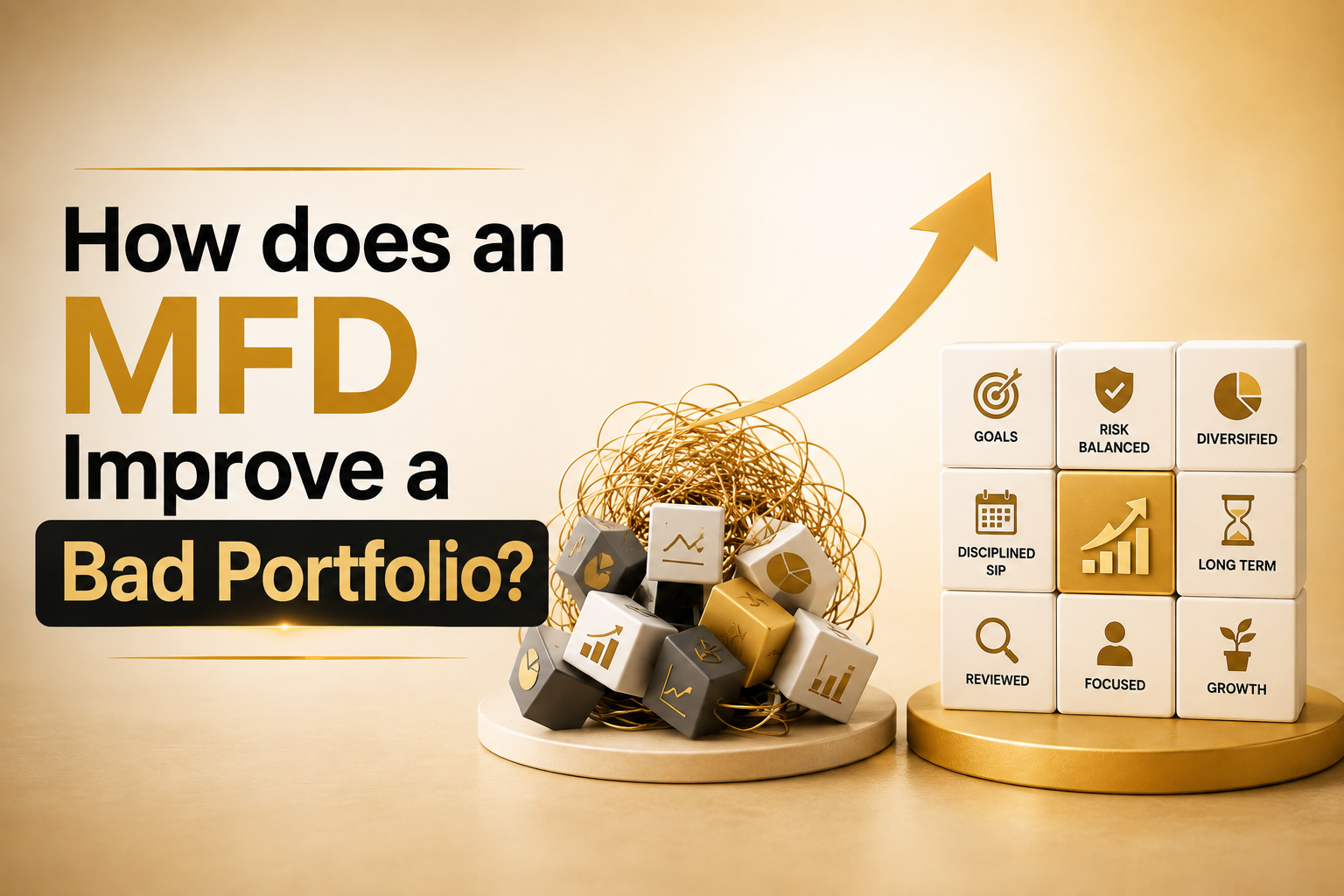
Your portfolio statement shows twelve funds and a decent overall return, so it looks fine on paper.Dig a little deeper, and you might find three funds holding the same twenty stocks, or a chunk of money sitting in equity that you'll need next year.This is what a bad portfolio actually looks like: structure gone wrong, not necessarily returns gone wrong.A mutual fund distributor in Pune works through this kind of mess by reviewing every holding together, spotting where things overlap, and rebuilding the structure around your actual goals instead of past habits.What Does A Bad Portfolio Actually Look Like?Bad doesn't mean every fund lost money.It means the pieces don't work together anymore, or never did.
A portfolio can carry solid individual returns and still be poorly built underneath.
- Several funds quietly holding the same top companies
- Too much money tied to one sector or market-cap category
- Equity investments sitting where a near-term goal needs stability instead
- Dozens of small, scattered investments with no clear reason
- Funds picked only because they topped a chart last year
- SIPs still running long after the original goal changed
None of this shows up clearly on a statement.
It only shows up once someone checks how the pieces fit.
Nine Steps To Rebuild A Struggling Portfolio
1. Bring Every Investment Into One Place
Start by pulling together every statement, SIP detail, and current value in one spot.A fund can look fine alone but create real duplication once it sits next to everything else you own.This single view is where the actual review begins.
2. Check For Overlap And ConcentrationThree diversified funds might all lean on the same twenty companies underneath.An AMFI registered Mutual Fund Distributor in Pune like Golden Mean Finserv checks this layer directly, not just fund names.
- Sector-wise exposure across every holding
- Large-cap, mid-cap, and small-cap weightage
- Repeated stocks appearing across different schemes
More funds rarely means more diversification.It depends on how different the holdings actually are underneath.
3. Match Each Fund To A Real Goal
Every fund should serve a purpose: retirement, a child's education, a home, or general financial growth.Funds without a clear goal attached are usually the first ones worth questioning during a review.
4. Review Risk Against What You Can Handle
Asset allocation means how your money splits across equity, debt, and other categories.A portfolio turns risky fast when equity sits far higher than your comfort level allows, especially for money you might need soon.
5. Look At Fund Performance The Right Way
A single bad year doesn't make a fund wrong for you.What matters is performance across several years, against a proper benchmark, and against funds with a similar strategy.
6. Remove What's No Longer Needed
Once overlap is clear, some funds simply become extra weight.
- Consolidating similar schemes into fewer, stronger ones
- Stopping new SIPs into redundant funds
- Reviewing whether a thematic bet still makes sense
- Redirecting new investments toward funds with a real role
Every switch carries tax and exit load consequences, so changes should be planned carefully, not rushed.
7. Fix A Messy SIP Structure
Too many small SIPs, dates that don't match your salary cycle, or amounts that never grew with your income all point to a structure that needs tightening.
8. Rebalance Regularly
Markets shift allocation on their own over time.Equity can grow larger than planned during a rally, or shrink more than intended during a fall.Periodic rebalancing brings the portfolio back toward its original shape.
9. Support Better Decisions During Volatile Times
Numbers alone don't fix behaviour. Investors often make costly moves during stressful markets.
- Panic selling during a sharp correction
- Chasing whatever fund performed best last quarter
- Stopping SIPs after a few weak months
- Exiting after a fall, then re-entering only once prices recover
Structured, regular conversations help keep decisions tied to goals instead of daily headlines.
Conclusion
A bad portfolio usually isn't about weak returns.It's about pieces that stopped working together over time.Bringing every investment into one view, removing overlap, and matching funds to real goals turns a scattered mess into something you can actually track and understand.
FAQsHow often should I get my mutual fund portfolio reviewed?
Once a year works for most investors, though a major life change like a new job or a goal shift calls for an earlier check.
Will removing overlapping funds always improve my returns?
Not necessarily. It mainly improves structure and reduces unnecessary risk, which matters more over the long run than a short-term return boost.
Does a mutual fund distributor guarantee better performance after a review?
No. Not a single AMFI registered Mutual Fund Distributor in Pune, even Golden Mean Finserv, can guarantee returns or remove market risk. The goal is a portfolio that fits your goals, not a promise of higher gains.
What documents should I keep ready before a portfolio review?Gather your latest account statements, SIP details, investment dates, and a simple list of your financial goals with rough timelines for each.
